Project at a Glance
Sq Ft Basement Treated
Final Moisture Content
Continuous Drying
Air Filtration
Executive Summary
After a fire broke out in the lower level of an Asbury, New Jersey home, our Northern NJ restoration team executed a comprehensive fire damage mitigation and decontamination plan in an unfinished basement. Over five days, technicians removed hazardous charred debris and fire-damaged contents, remediated dry soot and char from the concrete floor and masonry walls, addressed the water left behind by fire suppression, and ran continuous HEPA air filtration to control smoke particulates and odor.
The fire originated near a laundry station, leaving a dense layer of melted plastics and synthetics fused to the masonry. By leading with a HEPA-vacuum-first approach — recovering fine soot before any liquid cleaning agent touched the porous slab — the team avoided smearing residue deeper into the concrete and returned the structure to a dry, stable standard ready for reconstruction and professional deodorization.
Understanding the Incident
The Source: A Basement Fire at the Laundry Station
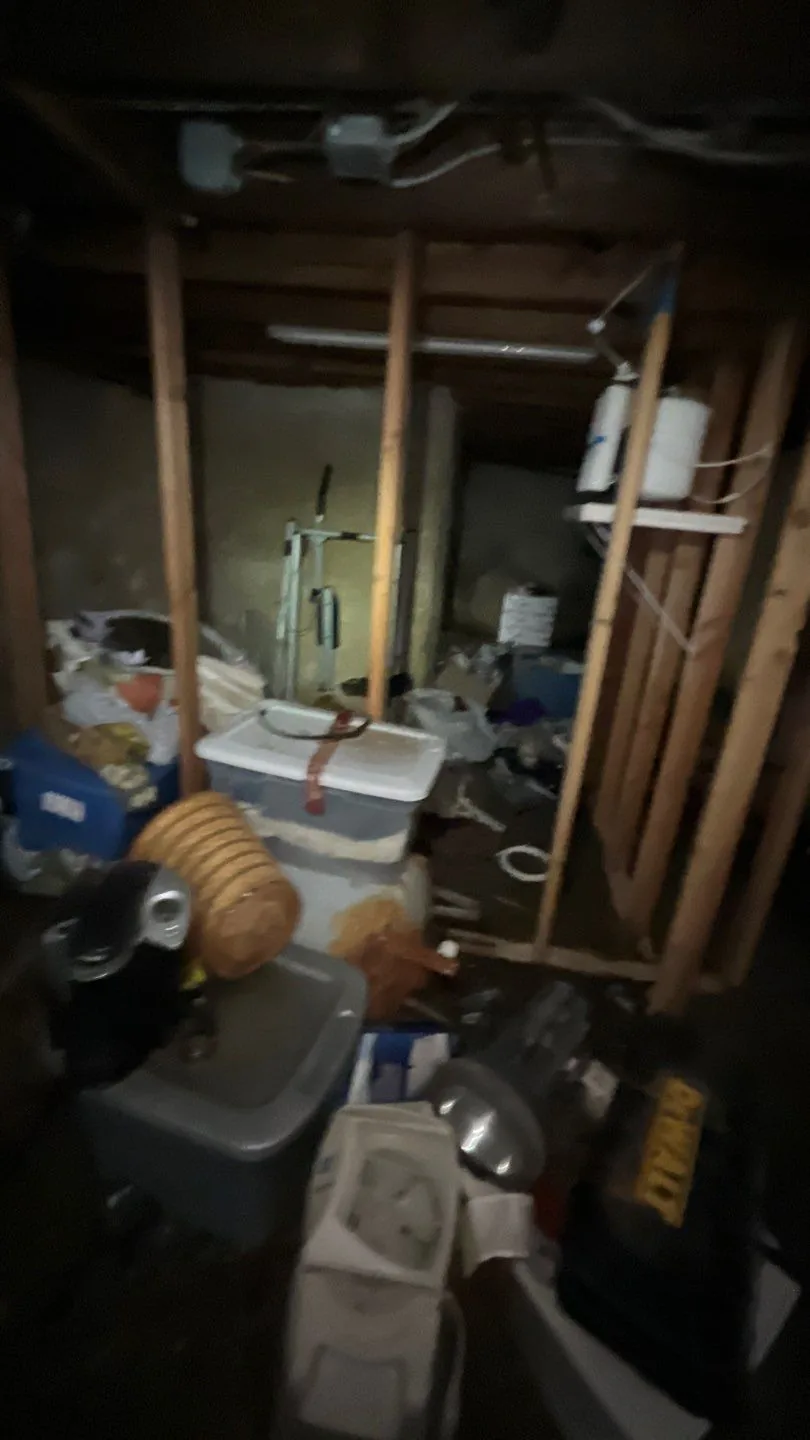
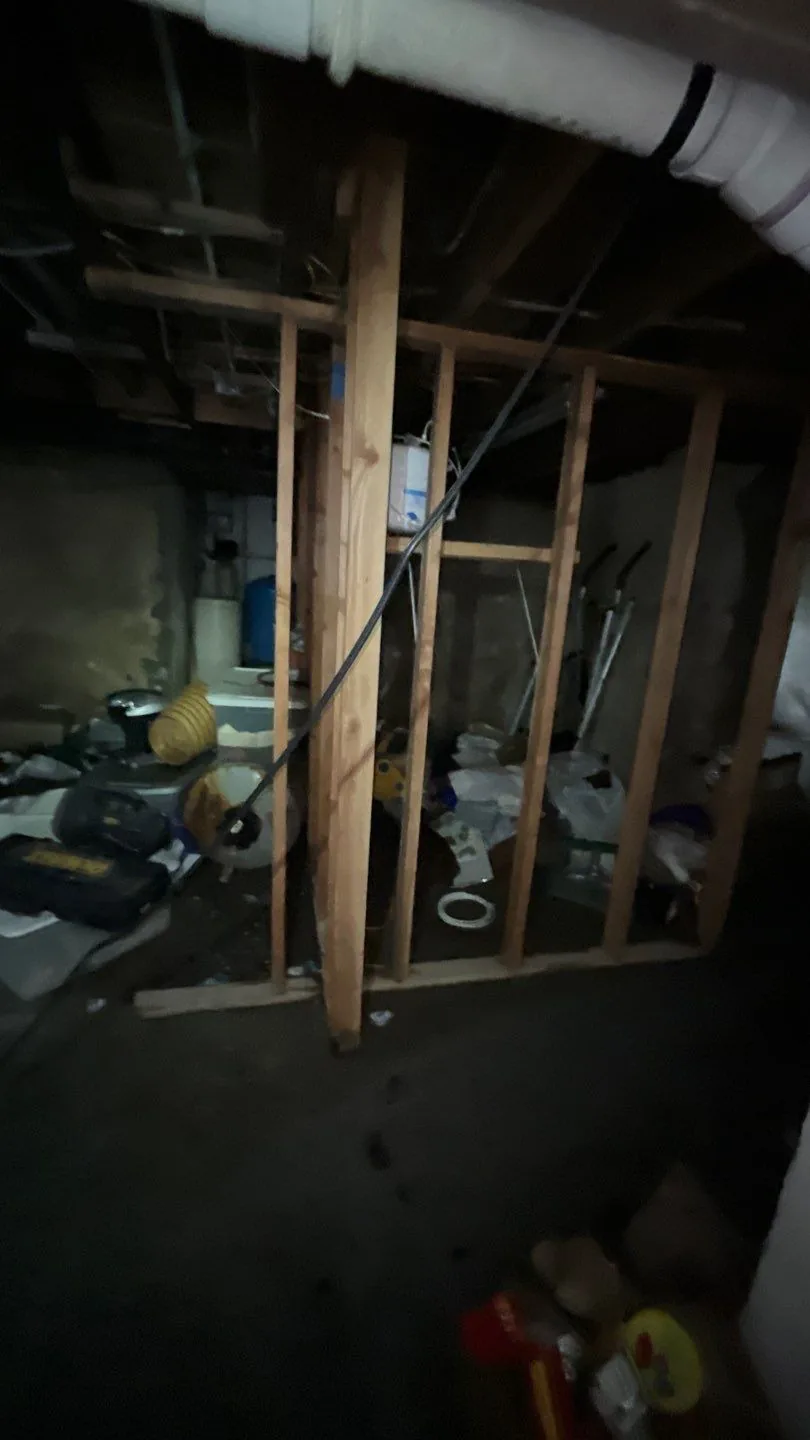
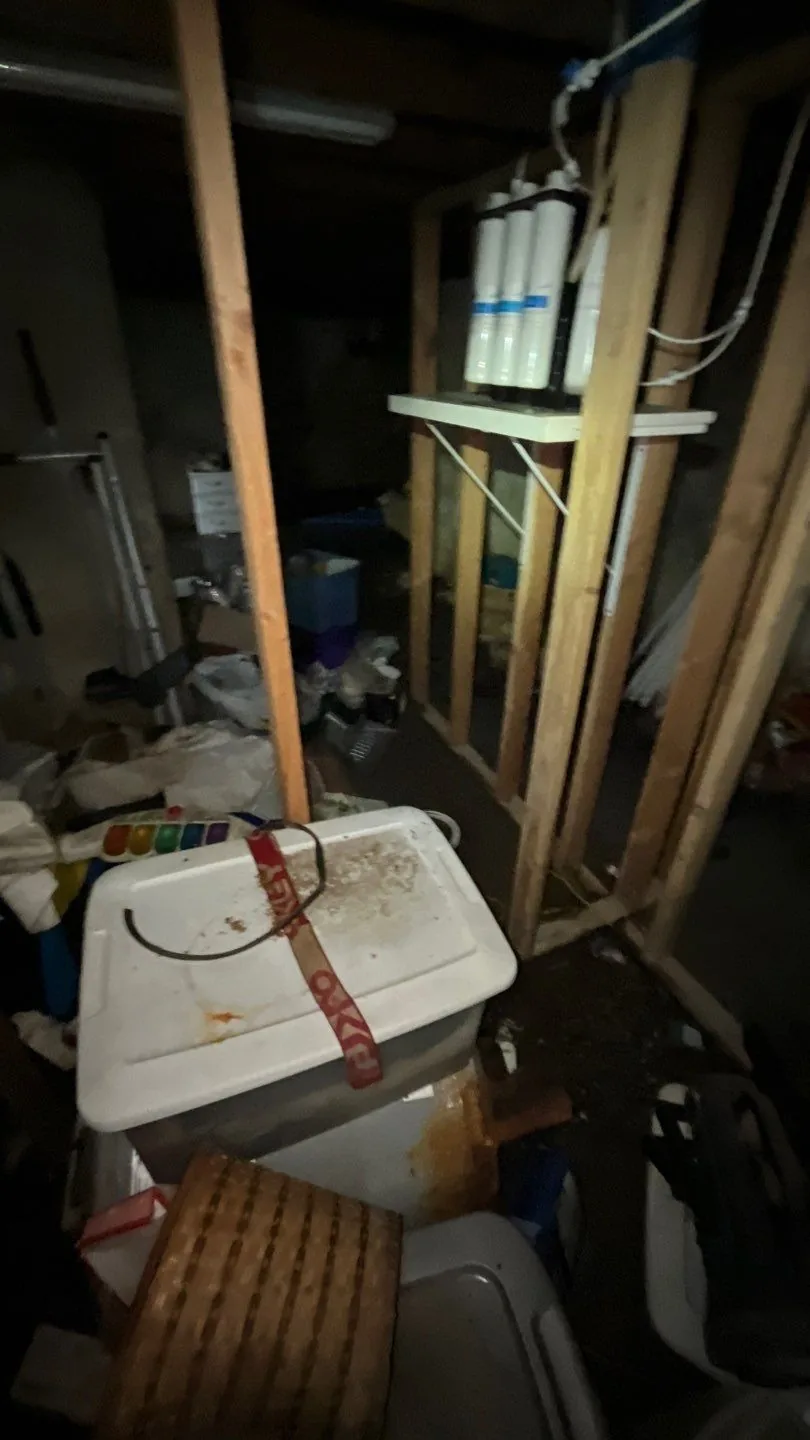
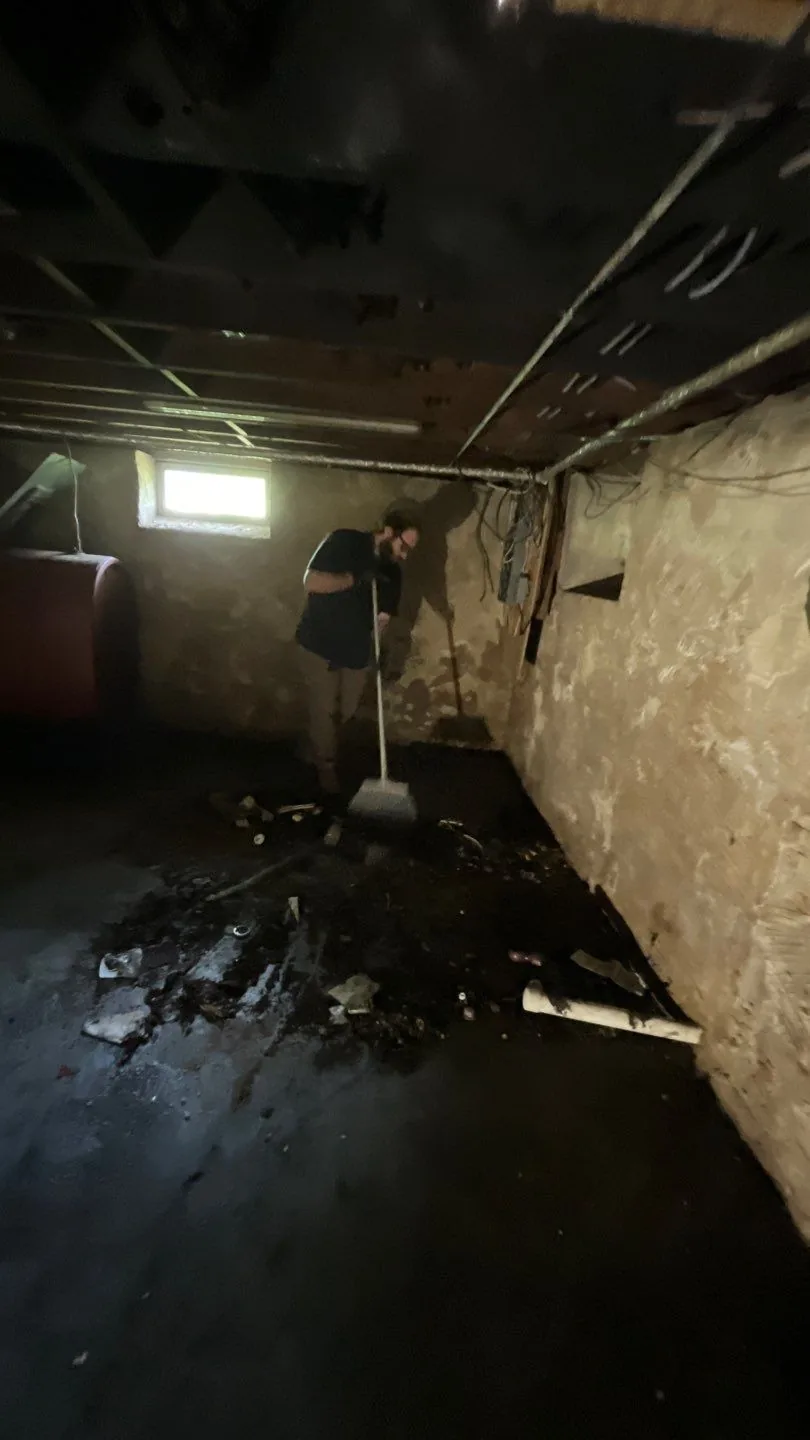
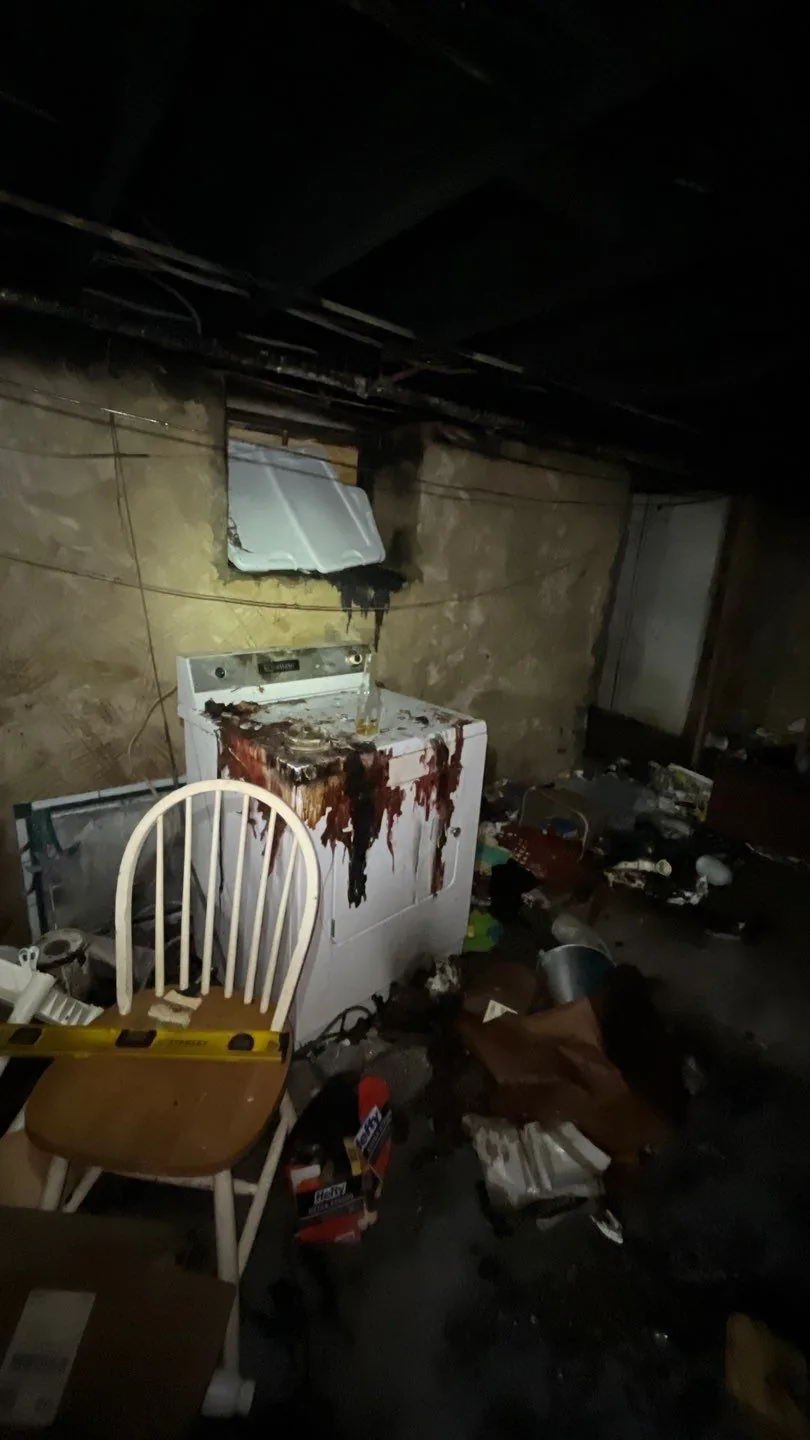
The fire started near a laundry station in the unfinished basement, where it consumed an appliance and surrounding contents before suppression. The intense heat melted plastics and synthetic materials, which then adhered directly to the masonry walls and concrete floor slab as they cooled — creating a stubborn, baked-on soot and char layer rather than a loose dust film.
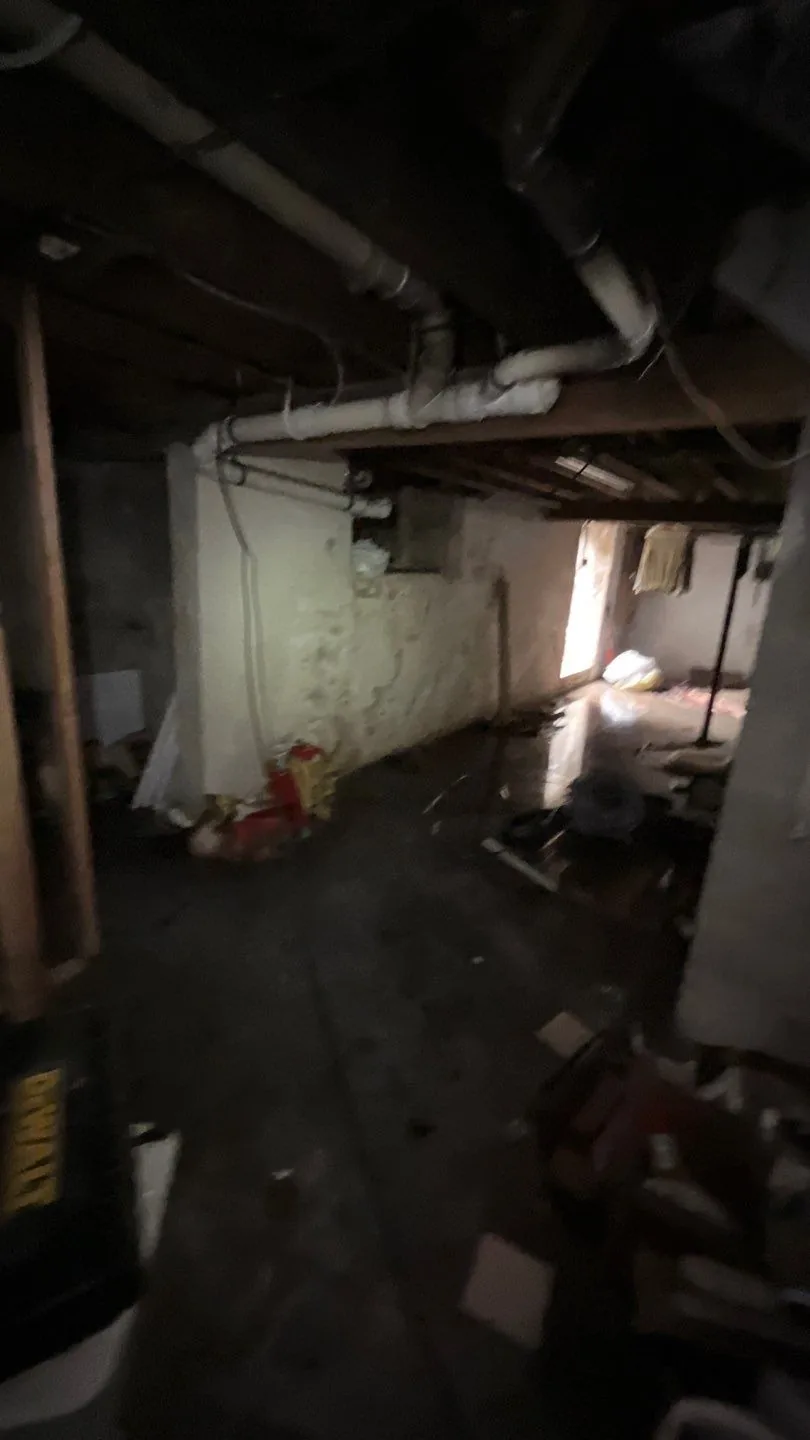
Affected materials included roughly 600 square feet of basement floor and wall surfaces, the charred appliance and structural debris at the point of origin, and the exposed ceiling joists and wiring overhead. Water introduced during fire suppression saturated the masonry, adding a structural drying problem on top of the soot remediation.
“Fire residue doesn’t just sit on the surface. Melted synthetics bond to porous concrete and masonry, and any soot pocket left behind becomes a long-term source of secondary odor.”
Property Assessment and Scope of Damage
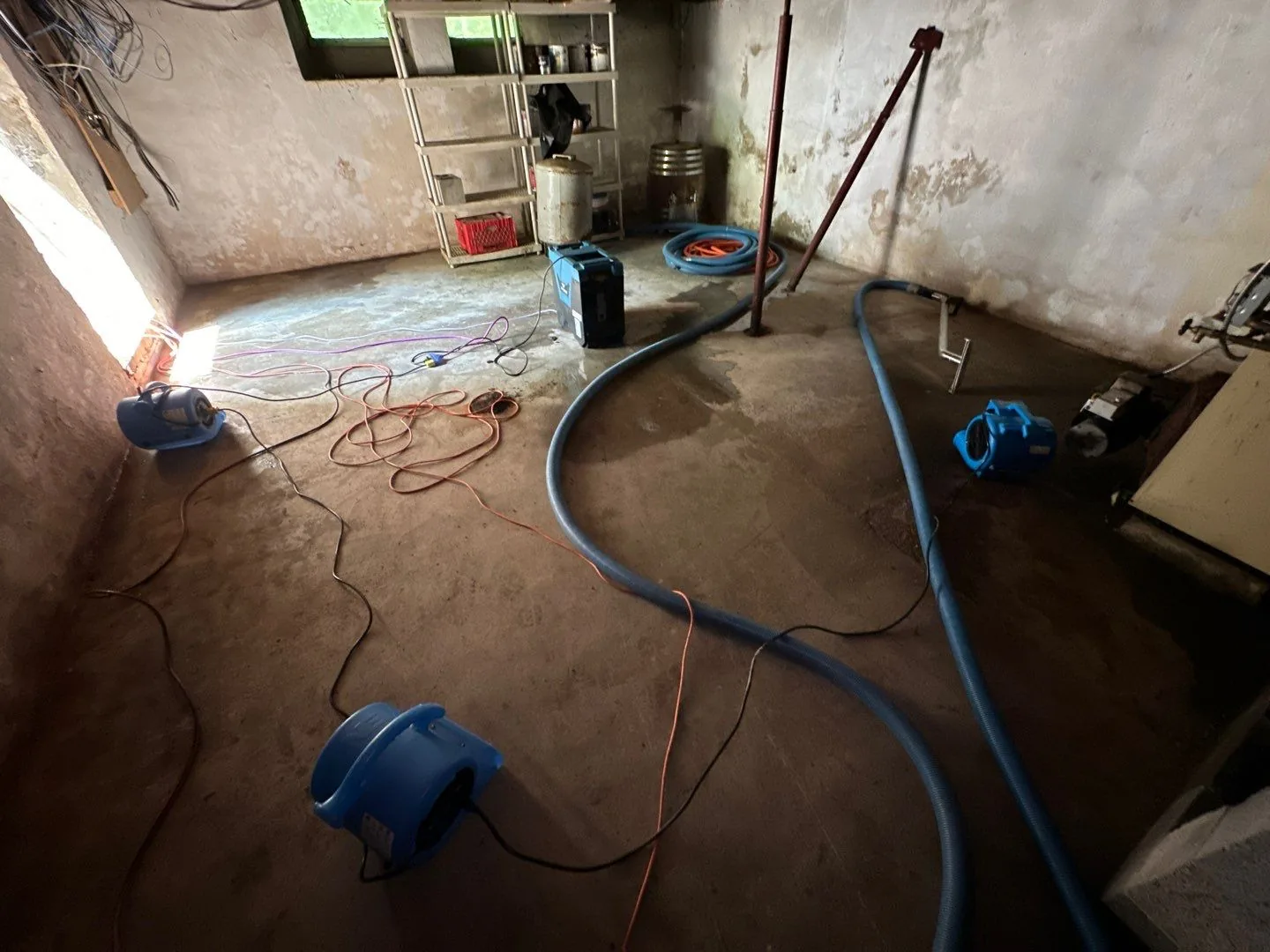
On arrival, technicians evaluated the contents for salvageability, mapped the soot and char distribution across the floor and walls, and used a moisture meter to gauge how deeply fire-suppression water had penetrated the masonry. The most concentrated damage was at the laundry station origin and along the lower masonry walls.
| Zone | Condition Found | Action Taken |
|---|---|---|
| Charred appliance & contents | Heavily fire-damaged | Sorted, removed & disposed per local regulations |
| Masonry walls | Melted synthetics & soot adhered | HEPA vacuum, manual scraping, detailed cleaning |
| Concrete floor slab | Dry soot & char layer | HEPA recovery, then pressure washing |
| Masonry (moisture) | Saturated from suppression | LGR dehumidification + air movers |
| Ambient air | Smoke particulates & odor | Continuous HEPA air scrubbing |
Response Strategy
The mitigation followed a disciplined sequence: remove hazardous bulk debris and unsalvageable contents, recover fine particulate dry before introducing liquids, clean and decontaminate the hard surfaces, and dry the saturated masonry under continuous filtration so no odor-causing residue remained.
The HEPA-Vacuum-First Approach
The innovative core of this project was sequencing. Applying liquid cleaning agents to a soot-covered concrete slab first would have driven fine carbon particulates deeper into the porous surface, “smearing” the residue and locking in odor. Instead, technicians led with industrial HEPA vacuums and wet/dry vacuums to capture dry soot and char, then followed with manual scraping, detailed surface cleaning, and pressure washing of the slab. This order kept the porous concrete from becoming a permanent soot reservoir.
Working in an Unfinished Basement
Exposed ceiling joists, complex wiring, and bare masonry meant there were countless crevices where soot could hide. Crews worked in full PPE — protective suits and respirators — and performed meticulous detail cleaning around joists and wiring runs to ensure no soot pocket was left to off-gas odor later.
Equipment Deployment Analysis
Fire mitigation in a confined, contaminated basement demands equipment that controls airborne particulates and moisture simultaneously — clean the air while drying the structure.
HEPA Air Scrubber
Ran continuously to capture hazardous smoke particulates and soot suspended in the air, controlling odor and protecting both occupants and technicians during the cleaning process.
Industrial LGR Dehumidifier
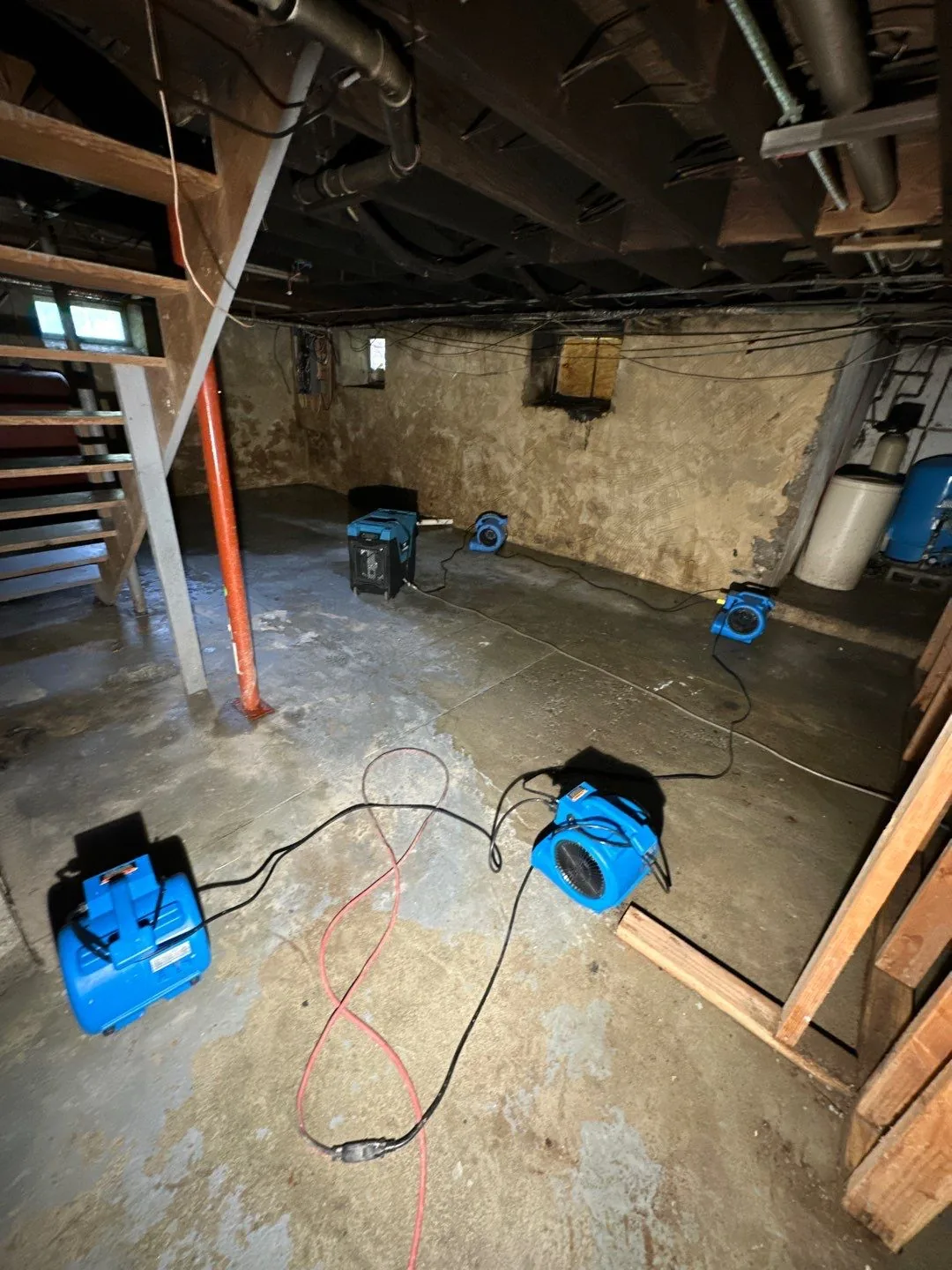
A Low-Grain Refrigerant dehumidifier managed the elevated humidity left by fire suppression, pulling moisture from the saturated masonry to reach dry standard.
High-Velocity Air Movers
Directed high-velocity airflow across the masonry walls and floor slab to accelerate evaporation of suppression water and circulate air toward the scrubber.
Industrial Wet/Dry Vacuums
Used in the HEPA-first phase to recover fine soot, char, and particulate from the slab and crevices before any liquid cleaning agents were applied.
Personal Protective Equipment (PPE)
Full protective suits and respirators protected technicians from hazardous soot, char, and airborne particulates throughout debris removal and detail cleaning.
Why HEPA-First Sequencing Mattered
Two ways to clean a soot-covered concrete slab — and why the order of operations changes the outcome.
Cleaning agents applied over dry soot
Dry recovery, then liquid cleaning
Drying Progress: Masonry Moisture
After 72 hours of continuous dehumidification and high-velocity airflow, the masonry walls and floor slab reached a dry standard below 12% — stable for reconstruction and professional smoke deodorization.
Restoration Timeline and Methodology
Why This Approach Worked
Sequence over speed: capturing dry soot with HEPA vacuums before applying any liquid kept fine carbon from smearing into the porous slab and locking in odor.
Clean the air while drying the structure: continuous HEPA filtration ran alongside dehumidification, so particulate control and moisture removal happened in parallel rather than in sequence.
Detail cleaning leaves no pockets: meticulous work around exposed joists and wiring ensured no hidden soot remained to cause secondary odors after reconstruction.
Fire Damage Response Across Northern New Jersey
Based in Fairfield, Advanced DRI provides 24/7 fire damage mitigation and decontamination throughout Northern NJ — including Essex, Union, Middlesex, Morris, Passaic, Bergen, and Sussex counties. Our team also serves surrounding and western New Jersey communities, including Asbury and the wider region where this project was completed.
Why Local Response Matters
Smoke and soot don’t stop spreading when the fire is out. Acidic residue continues to etch surfaces and migrate into porous materials, while lingering odor sets deeper the longer it goes untreated. A fast, local response — paired with the right HEPA-first sequencing — is the difference between a clean mitigation and permanent odor and staining.
Key Takeaways
A fire-damaged Asbury basement was decontaminated and dried to standard in five days through disciplined debris removal, a HEPA-vacuum-first soot strategy, and continuous filtration paired with structural drying. Masonry and slab reached below 12% after 72 hours, with air quality stabilized and the space ready for reconstruction and professional deodorization.
Fire or smoke damage in your home? Advanced DRI’s Northern NJ team is available 24/7. Call (862) 702-3311 for emergency fire damage mitigation in Asbury and the surrounding communities.