Project at a Glance
Sq Ft Interior Cleaned
Verification Pass
Particulate Extraction
Silver & Crystal Saved
Executive Summary
When a smoke and soot event left a fine particulate film across the interior of a high-end residence in Newfoundland, New Jersey, our Northern NJ decontamination team executed a meticulous, room-by-room structure cleaning. Across roughly 1,600 square feet of premium multi-room living space, technicians in full protective equipment extracted settled particulate from every horizontal and vertical surface, hand-restored high-value contents, and validated the result under high-intensity inspection lighting.
This project shows what careful, methodical fine-particulate decontamination looks like when fragile assets are on the line: no scratched silver, no clouded crystal, and no residual shadow lines on satin-sheen walls — just a clean, certified handoff back to the homeowner.
Understanding the Incident
The Challenge: Fine Particulate on Fragile, High-Value Assets
Soot and smoke particulate is deceptively invasive. Its fine, oily particles settle into every surface texture, cling to vertical faces, and — critically — can abrade delicate finishes if handled incorrectly. In this home, the particulate had settled across ceilings, crown moldings, wall faces, hardwood floors, area rugs, and an extensive collection of fragile, high-value contents.
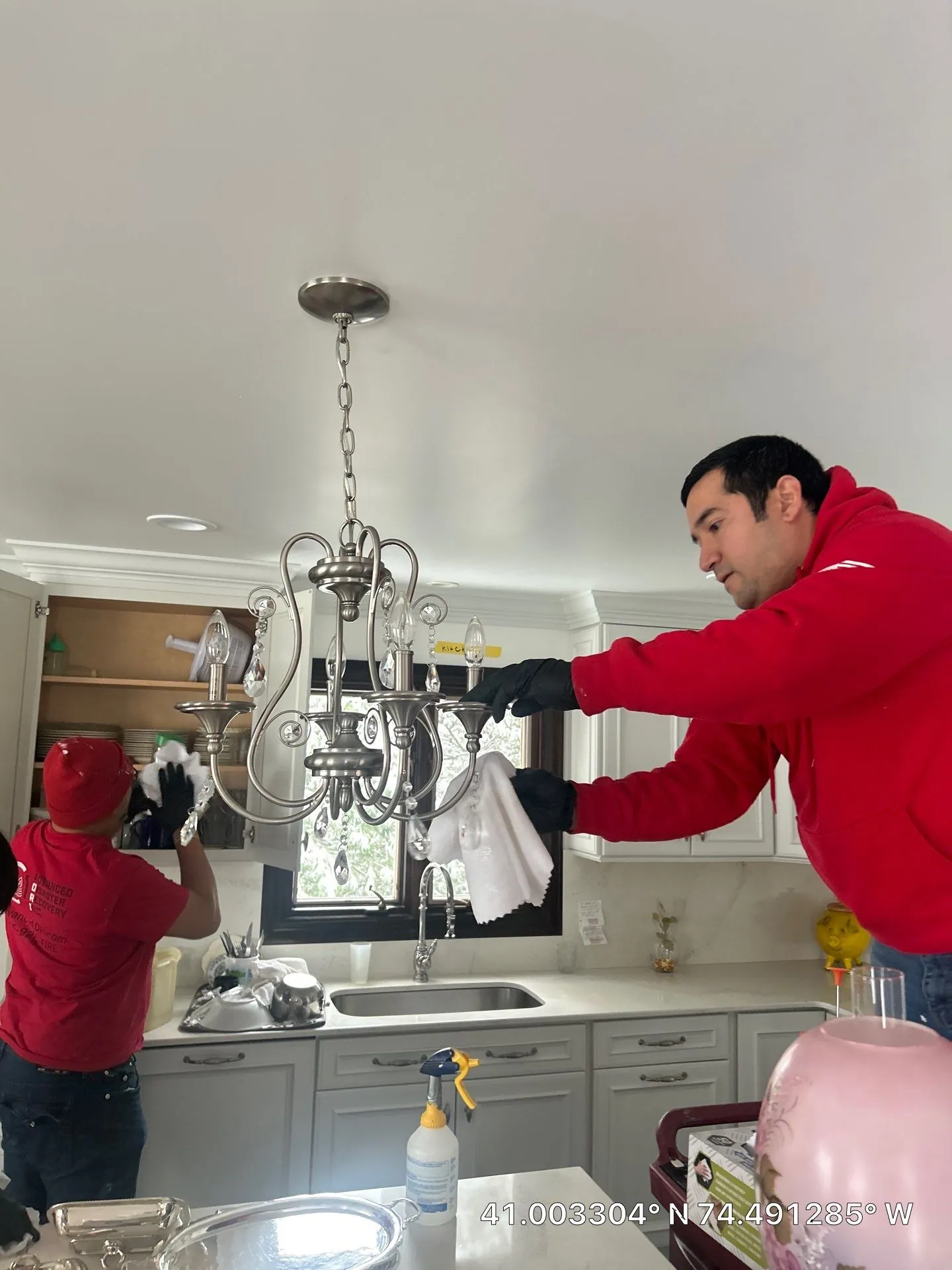
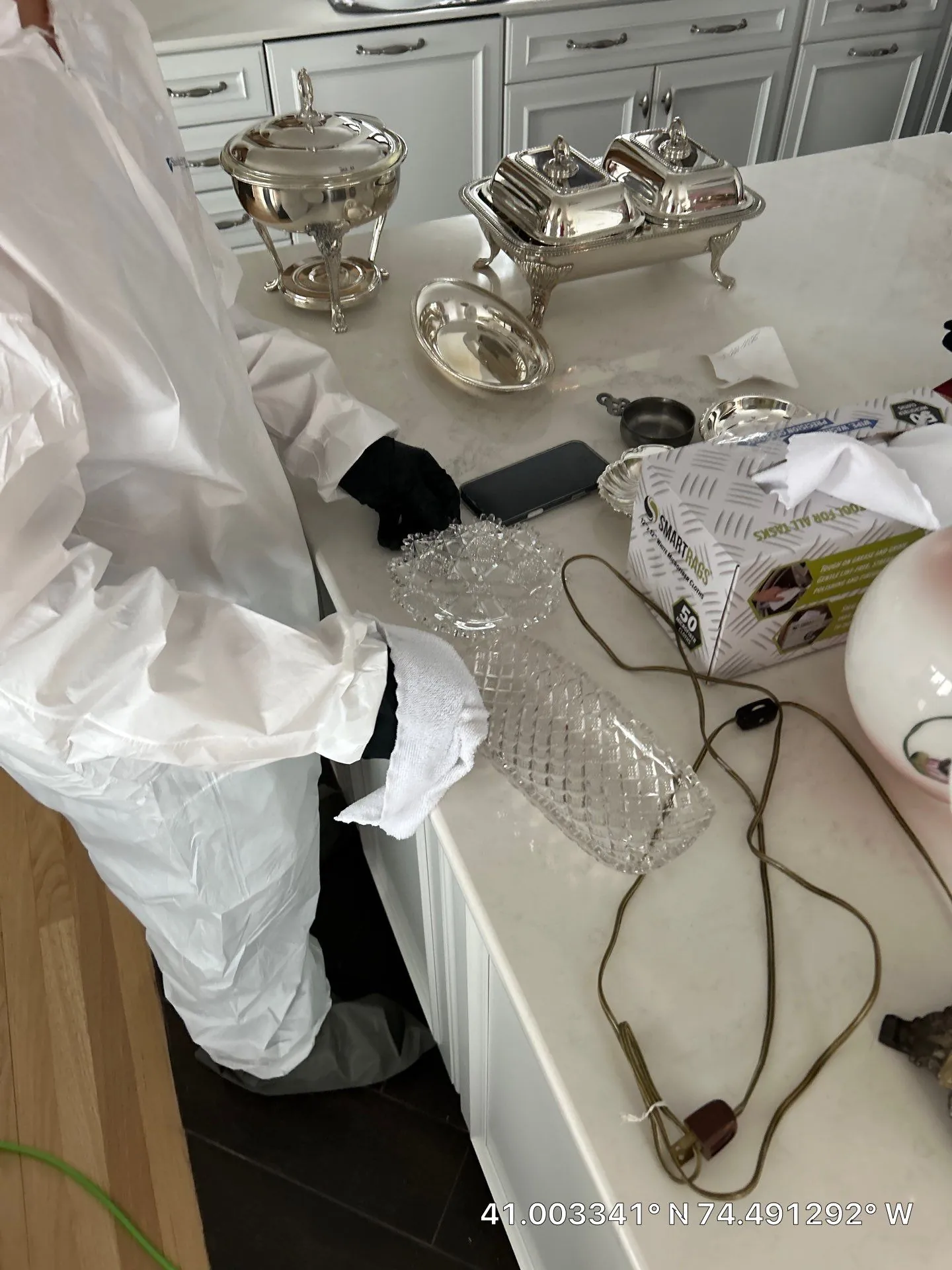
Affected assets included detailed silver serving platters, intricate glass crystal glassware, ornamental light fixtures, and a delicate multi-tiered brass crystal chandelier. Removing particulate from these items required precision cleaning by technicians in specialized safety suits, working slowly enough to fully lift the residue without introducing scratches or micro-abrasions to the fine metal and glass finishes.
“With fine particulate on satin walls and crystal, the wrong wipe does more damage than the soot. The method has to lift the residue, not grind it in.”
Property Assessment and Scope of Damage
On arrival, technicians surveyed each affected room to map particulate loading across structural surfaces, flooring, and contents. The scope spanned four coordinated cleaning disciplines, each matched to the surface and asset type.
| Zone | Condition Found | Action Taken |
|---|---|---|
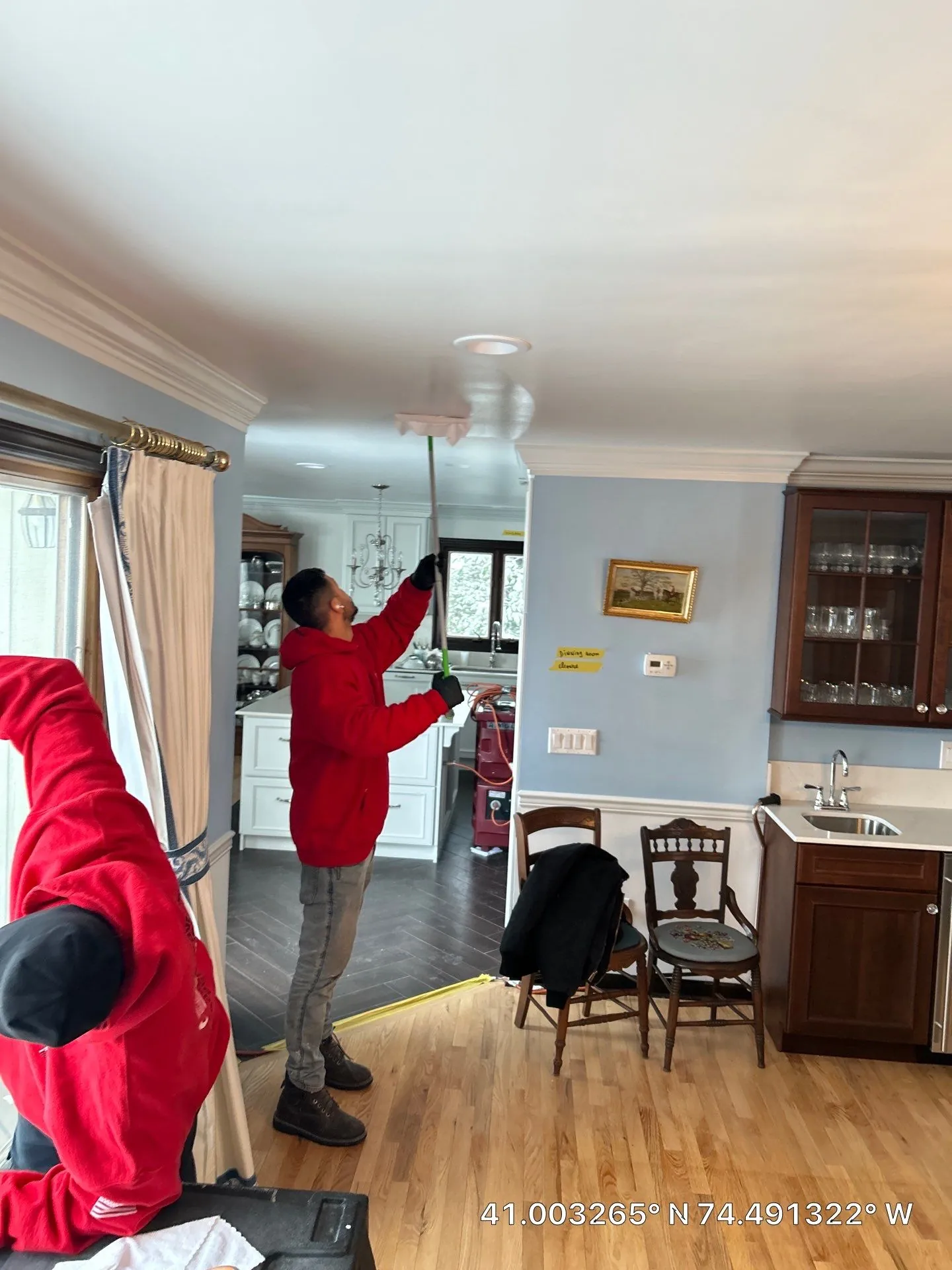
| Ceilings, crown molding & walls | Settled particulate film | Dry-chem sponge pass + damp microfiber finish |
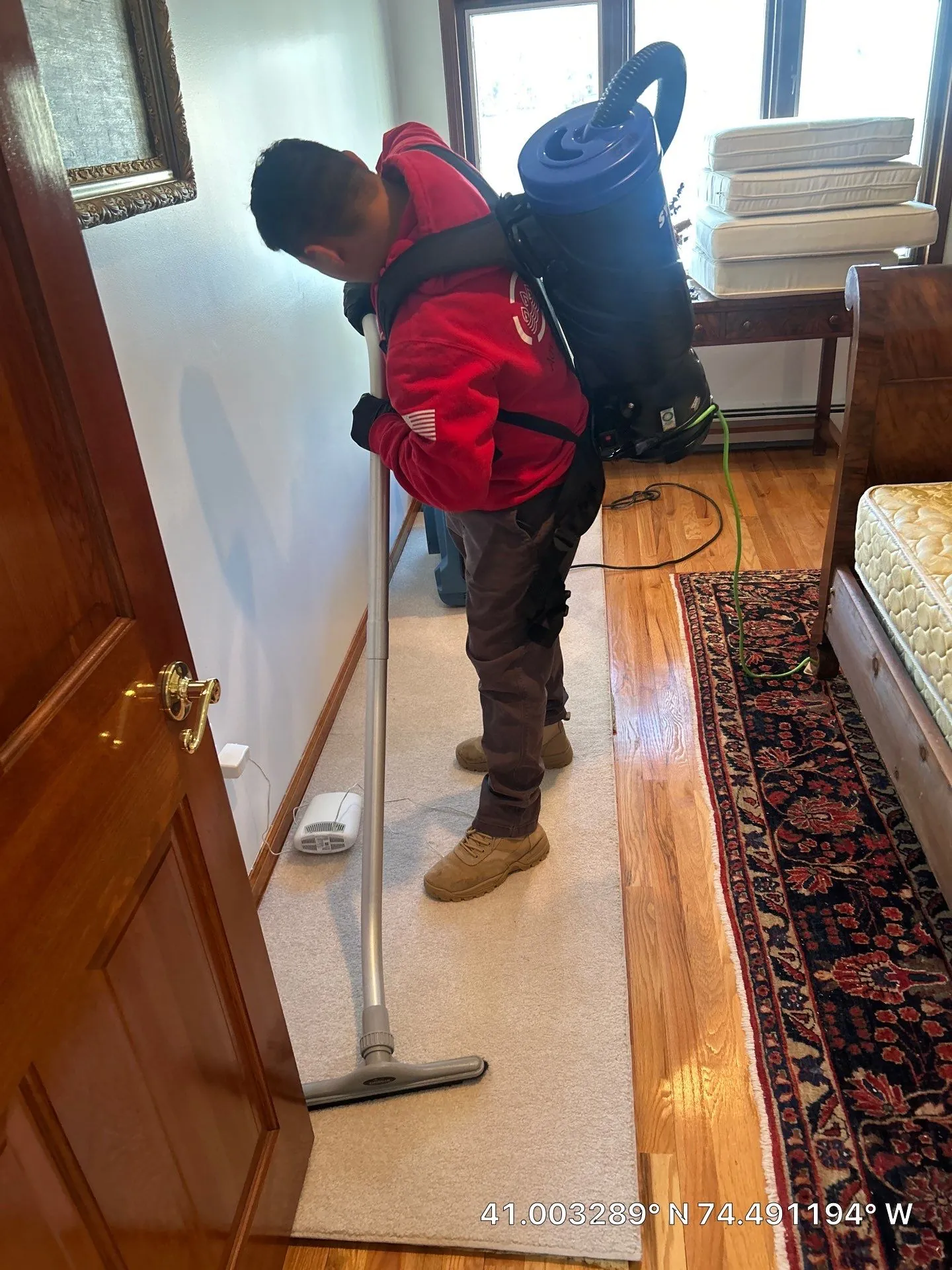
| Hardwood floors, rugs & runners | Particulate loading | Floor-to-ceiling HEPA backpack extraction |
| High-value contents | Fine residue on silver & crystal | Hand-wiping & precision polishing |
| Cabinetry, shelving & chandelier | Residue in detail & joinery | Fixtures & millwork detailing |
Response Strategy
The decontamination followed a deliberate top-down, dry-to-wet sequence: capture loose particulate before it could be smeared, extract it from soft and hard flooring with HEPA filtration, then hand-treat the delicate contents and millwork last. Continuous air handling ran throughout to keep ambient particulate counts falling.
Protecting the Finishes
The home’s satin-sheen walls and mirror-polished metal were the constraint that shaped every choice. Aggressive liquid cleaning would streak the walls; abrasive contact would scratch the silver and crystal. Technicians worked in Tyvek suits and P100 respirators, using high-adhesion chemical sponges and precision detailing cloths so that particulate was trapped and carried away rather than dragged across the surface.
Equipment Deployment Analysis
The right tool matched to each surface did the work here — HEPA filtration for extraction, extension reach for the ceiling plane, and full PPE to keep technicians and contents protected throughout.
Industrial Backpack HEPA Vacuums
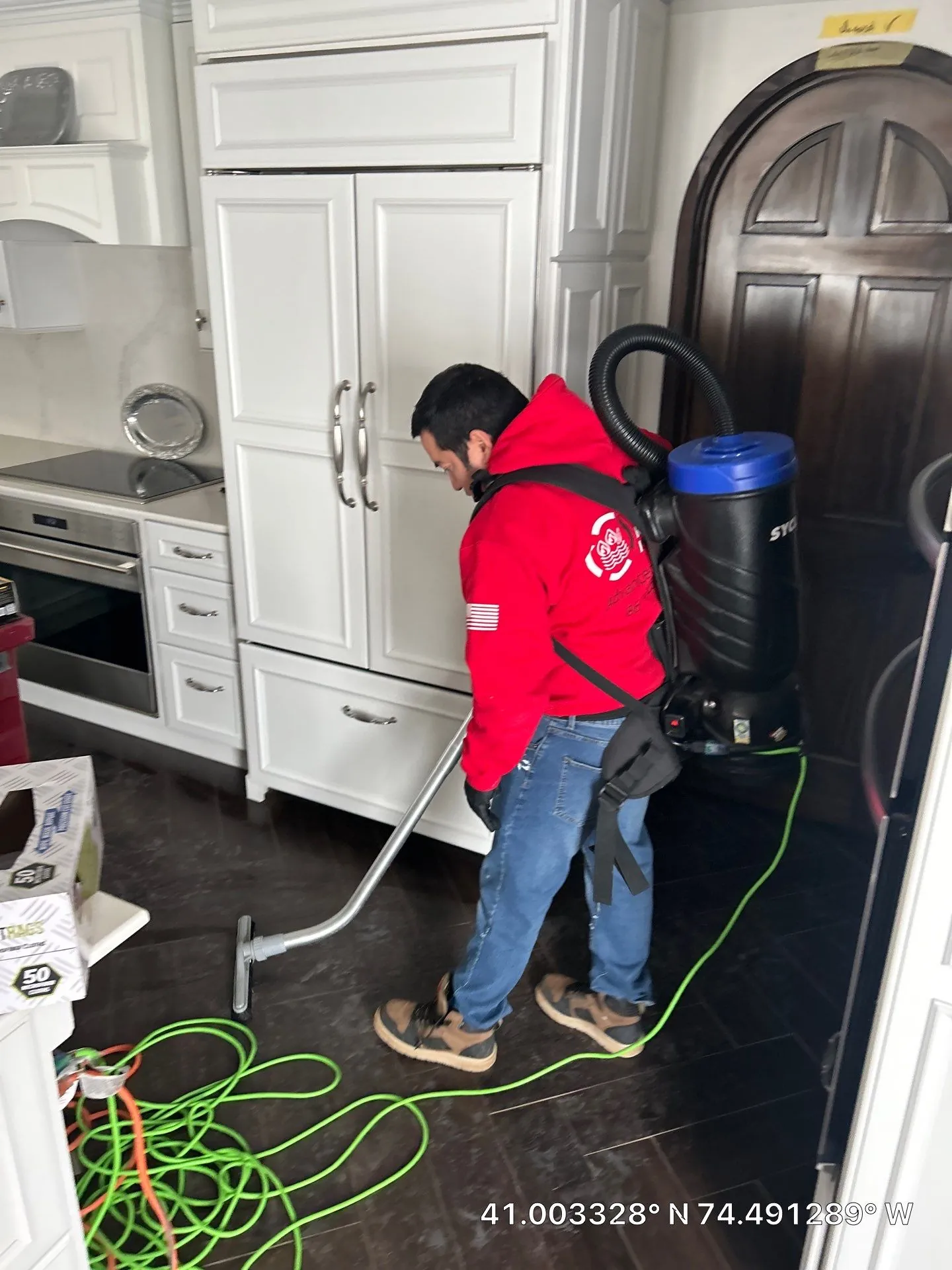
Mobile backpack HEPA vacuums with specialized floor and wand attachments extracted settled particulate from hardwood, area rugs, and carpet runners while capturing fine particles in HEPA filtration rather than recirculating them.
Extension Wall & Ceiling Poles
Telescoping poles fitted with micro-fiber pads let technicians reach the full ceiling plane, crown moldings, and high wall faces to wipe particulate without ladders disturbing settled residue.
Chemical Sponges & Detailing Cloths
High-adhesion dry-rubber chemical sponges lifted loose particulate binders from surfaces, while precision detailing cloths completed the damp finish pass on delicate contents and millwork.
Technician PPE
Tyvek suits and P100 particulate half-mask respirators protected technicians from airborne particulate and prevented cross-contamination of the clean, high-value contents during handling.
The Dual-Stage Dry-to-Wet Wash Method
To fully remove particulate from satin-sheen vertical surfaces without streaking, the team used a two-stage containment wash — trapping dry particulate first, then finishing damp — so residue was lifted, never smeared.
Dry-Rubber Sponge Pass
High-adhesion chemical sponges are drawn across the surface to trap and bind loose particulate, removing the bulk of the residue with zero liquid.
Damp Microfiber Finish
An immediate damp microfiber finish coat clears any remaining film, leaving the satin sheen even and streak-free.
No Smear, Faster Cycle
Separating dry capture from the wet finish avoided liquid smearing and reduced total processing time per surface.
Restoration Timeline and Methodology
Why This Approach Worked
Top-down, dry-to-wet discipline: capturing loose particulate before any liquid touched the wall prevented streaking on satin-sheen surfaces and protected fragile finishes throughout.
HEPA filtration end to end: extracting particulate into HEPA media — rather than brushing it airborne — while air handling ran continuously kept ambient counts falling instead of resettling on clean surfaces.
Project Documentation Gallery


Fine Particulate & Structure Cleaning Across Northern New Jersey
Newfoundland sits in Passaic County, New Jersey, which is squarely within Advanced DRI – Fairfield Restoration’s service area. Our Northern NJ team provides soot, smoke, and fine particulate decontamination throughout Essex, Union, Middlesex, Morris, Passaic, Bergen, and Sussex counties.
Why Local Response Matters
Fine particulate does not stay put — it migrates through a home and re-settles on clean surfaces until it is fully extracted and the air is cleared. In high-end properties filled with fragile, high-value contents, a local team that can respond and work methodically is the difference between salvaging irreplaceable silver and crystal and losing them to abrasion or permanent staining.
Key Takeaways
A 1,600-square-foot soot event in a premium Newfoundland home was returned to certified-clean condition with disciplined top-down structure cleaning, HEPA extraction, and precision content restoration. Every treated surface, cabinet shelf, and content item passed strict white-glove verification under high-intensity inspection lighting — with the silver, crystal, and chandelier saved and returned to the homeowner.
Soot or smoke damage in your home? Advanced DRI – Fairfield Restoration serves Northern New Jersey. Call (862) 702-3311 for expert soot and fine particulate decontamination in Newfoundland and the surrounding communities.