Project at a Glance
Emergency Response
Roof Area Stabilized
Rated Protection
Active Leaks Confirmed
Executive Summary
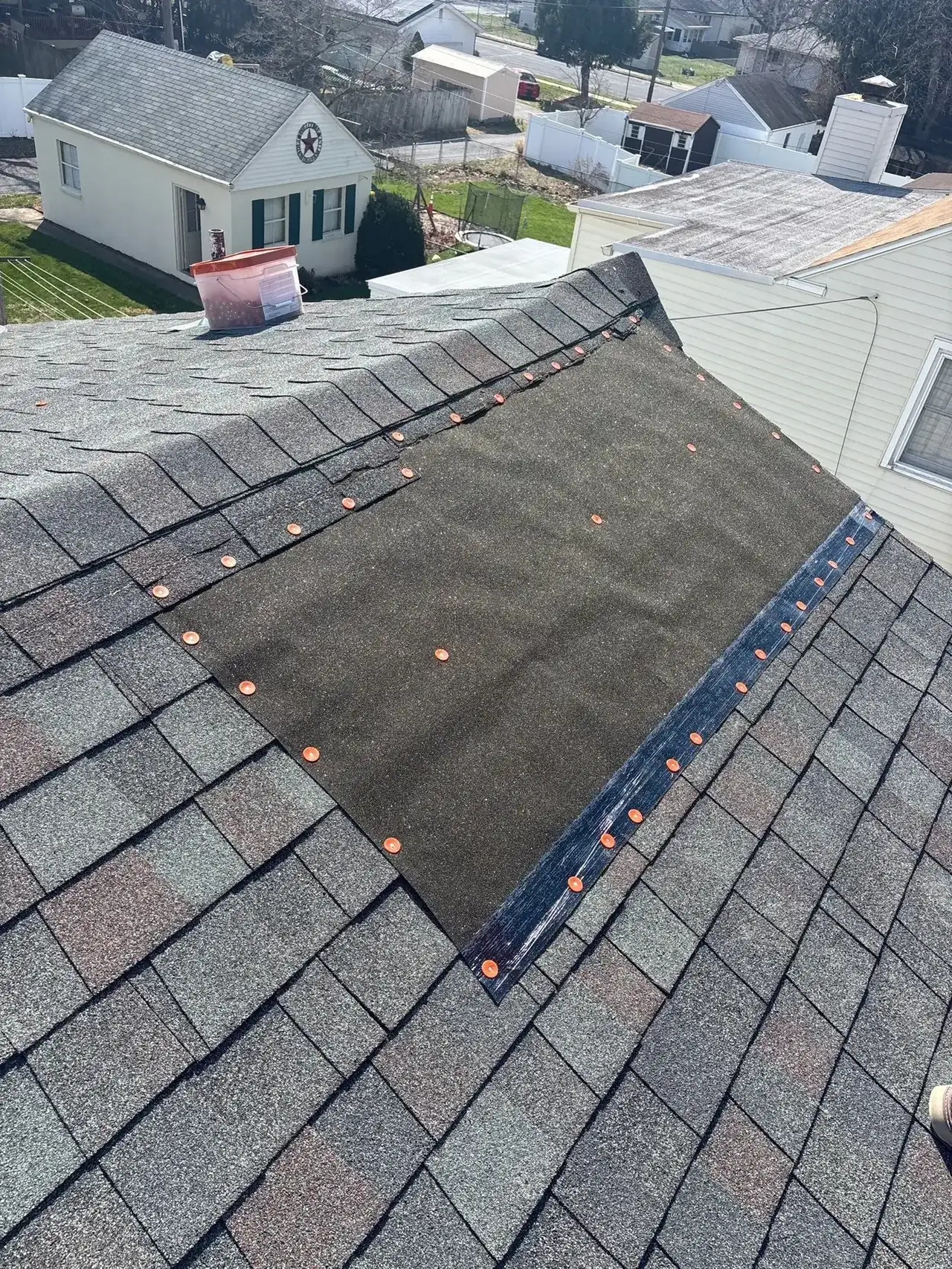
When high winds tore architectural shingles off a residential roof in Allentown, Pennsylvania, exposing the deck along a vulnerable roof hip, our team responded the same day to lock the structure down before the next rain. In a single visit, technicians assessed the storm damage, cleared loose shingle fragments and exposed nails, installed a heavy-duty synthetic underlayment over the breach, and mechanically fastened it to withstand continued wind gusts.
An attic inspection immediately after the install confirmed no active leaks and no secondary interior ceiling saturation. The roof is now stabilized against Category 1 weather events, with a temporary patch rated for up to 90 days of exposure — buying the homeowners time for insurance adjustment and a permanent shingle replacement.
Understanding the Incident
The Source: Wind Damage & Shingle Displacement
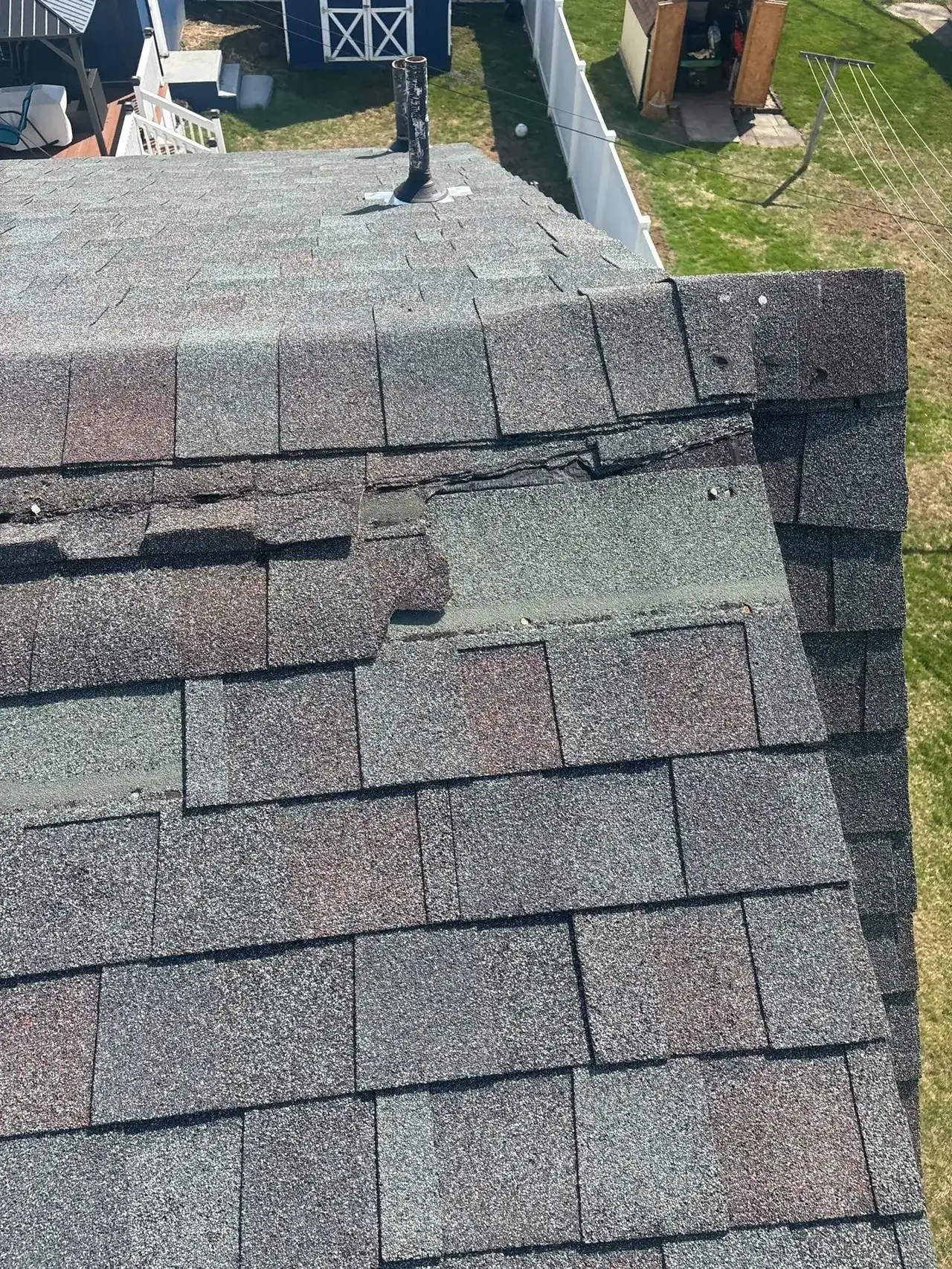
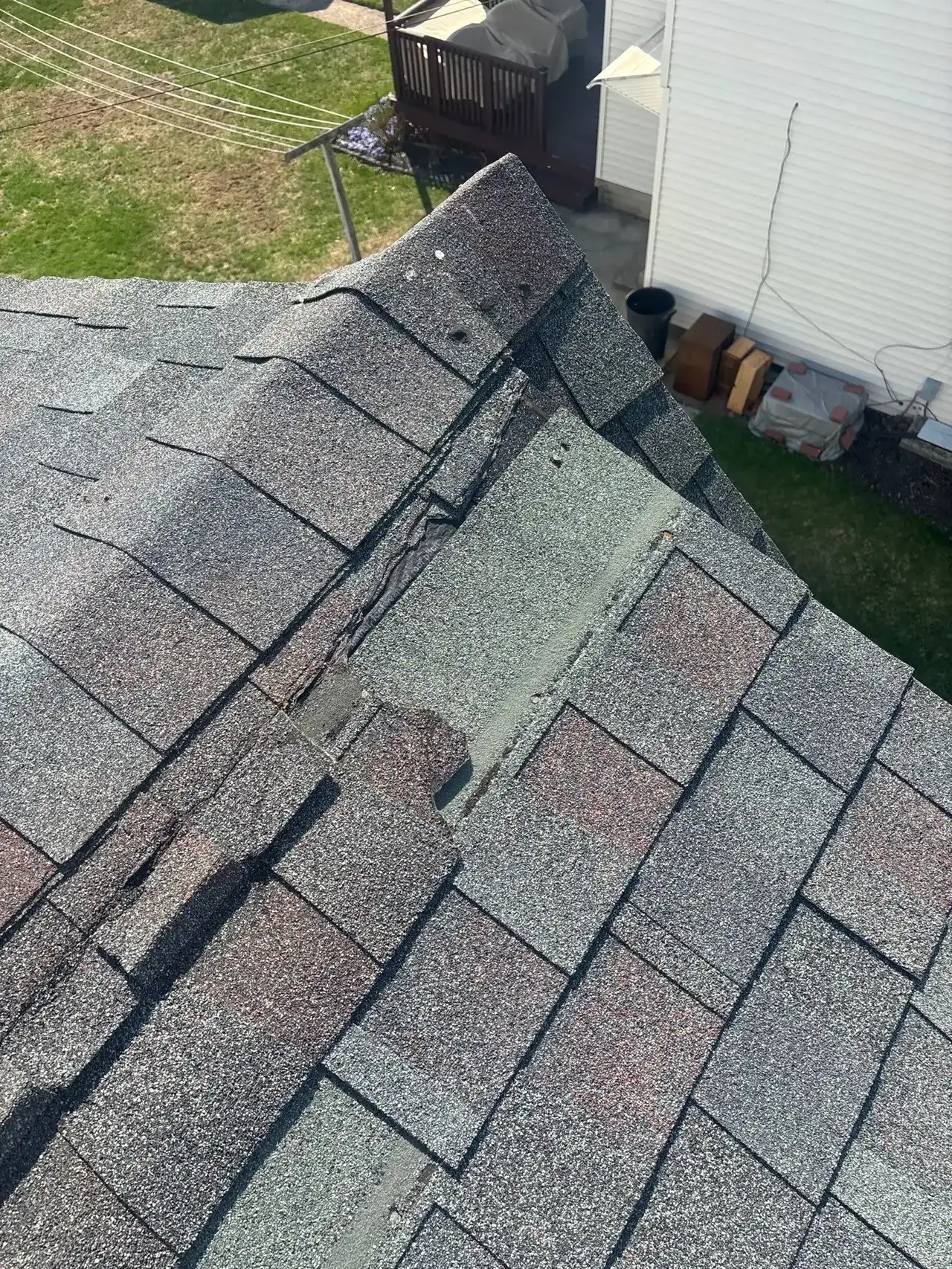
The damage was caused by a wind event that lifted and displaced architectural shingles and compromised the ridge caps along the roof hip. With the underlying deck exposed, the home faced an open path for water intrusion straight into the attic — the kind of breach that turns a roof repair into an interior water-damage claim if it is left open through a single storm.
The affected area covered roughly 100 square feet concentrated at a roof hip and ridge junction — a high-turbulence zone where wind loads are strongest and where a standard flat tarp is most likely to fail.
“An exposed roof deck is a clock. The next rain decides whether you have a roof repair or a ceiling-and-insulation rebuild — so the priority is a watertight, wind-stable patch today, not tomorrow.”
Property Assessment and Scope of Damage
On arrival, technicians performed a roof-up assessment, identifying the missing architectural shingles and the compromised ridge caps along the hip. The inspection confirmed the deck was exposed but structurally sound, with no penetration into the attic — meaning the right move was rapid mitigation, not emergency repair of the framing.
| Zone | Condition Found | Action Taken |
|---|---|---|
| Roof hip (architectural shingles) | Missing / displaced | Cleared and tarped with synthetic underlayment |
| Ridge caps | Compromised at the junction | Underlayment integrated beneath existing ridge shingles |
| Exposed deck | Loose fragments & protruding nails | Debris cleared, surface prepped |
| Attic interior | No active intrusion | Inspected post-install — confirmed dry |
Response Strategy
Emergency roof stabilization follows a tight, sequential plan: assess the breach, clear and prep the surface, lay watertight covering, and fasten it down hard enough to survive the next weather event. With storm conditions still active, every phase ran with fall-protection in place.
Solving for a High-Turbulence Hip
Because the damage sat at a roof hip and ridge junction — a high-turbulence area — standard flat tarping was insufficient. Instead, the material was integrated under the existing ridge shingles to create a “shingle-effect” shed, channeling rainwater down and over the covering the way a finished roof would. High winds during installation meant the tarp wanted to billow, so technicians added extra mechanical fasteners — cap nails and perimeter furring strips — to hold the membrane flat and tight.
Equipment Deployment Analysis
This was a tools-and-technique job. The right covering material and the right fastening pattern mattered far more than equipment count.
Synthetic Reinforced Roof Underlayment
Rather than a standard blue poly-tarp, technicians used a high-grip synthetic underlayment — more durable, slip-resistant for the follow-up adjusters and repair crews who would walk it, and with superior UV resistance for the weeks of exposure ahead.
Pneumatic Cap Nailer
A pneumatic cap nailer (with hammer backup) drove plastic-cap nails through the membrane, distributing holding force across a wide bearing surface so the covering would not tear free or billow under wind load.
Ladders, Harness & Utility Knives
Extension ladders and a fall-protection harness kept the crew safe on a storm-exposed roof, while utility knives allowed precision fitting of the underlayment around the ridge line and vent penetrations.
Why Emergency Tarping Matters: The Water-Intrusion Clock
An exposed roof deck escalates fast once water gets in. Same-day tarping stops the cascade before it starts.
By stabilizing on the same day, this project stayed at Hour 0 — no interior damage, no mold pathway, and a clean handoff for permanent repair.
Same-Day Stabilization Timeline
The entire mitigation — assessment through final fastening — was completed in a single visit on April 15, 2026.
Why This Approach Worked
Material upgrade over the standard tarp: a high-grip synthetic underlayment delivered better durability, UV resistance, and walkable safety than a poly-tarp — important for a 90-day exposure window and the crews who follow.
Technique tuned to the hip: integrating the membrane under the ridge shingles created a true water shed, and extra cap-nail fastening kept it flat against high winds that would have lifted a flat tarp.
Storm Response Across Northern New Jersey & the Tri-State Region
Based in Fairfield, Advanced DRI provides 24/7 storm and emergency mitigation throughout Northern New Jersey — including Essex, Union, Middlesex, Morris, Passaic, Bergen, and Sussex counties. For major storm events, our crews also respond across the broader tri-state and Lehigh Valley region — as on this Allentown, Pennsylvania project, handled by the nearest branch.
Why Local Response Matters
Wind and storm damage rarely waits for a convenient time. Because an exposed roof deck can turn into interior water damage and mold within a single rain event, same-day tarping and stabilization is the single biggest factor in keeping a storm claim limited to the roof rather than the rooms below.
Key Takeaways
A wind-damaged roof in Allentown was stabilized the same day with a synthetic-underlayment patch engineered for a high-turbulence hip and fastened to ride out further gusts. Zero active leaks, no interior saturation, and a 90-day rated cover gave the homeowners breathing room for insurance and permanent repair.
Storm damage to your roof? Advanced DRI is available 24/7 for emergency tarping and stabilization. Call (862) 702-3311 for fast storm-damage response across Northern New Jersey and the surrounding region.